

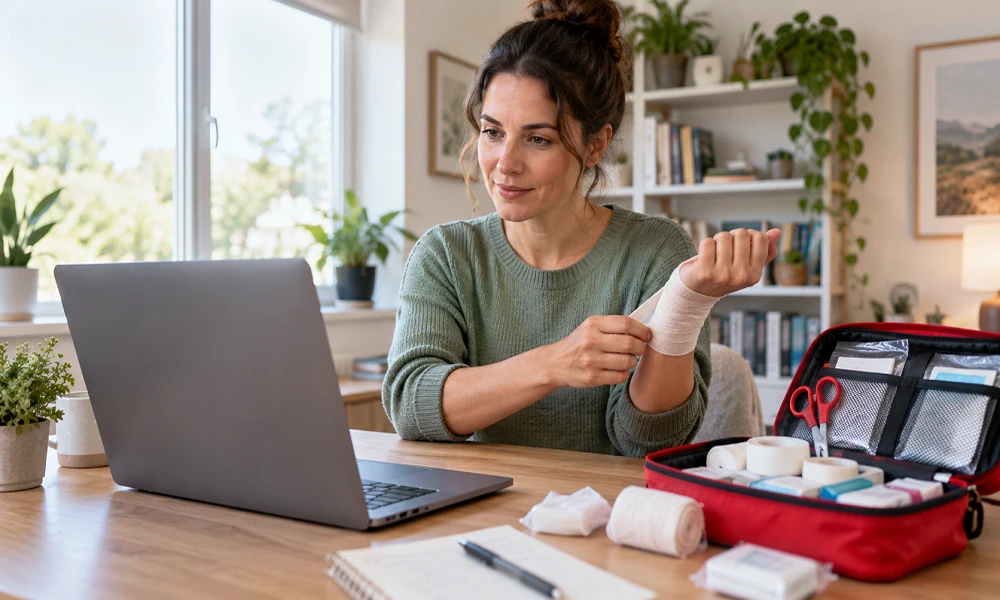
Emergencies rarely arrive with a warning. Someone may suffer a cut, burn, fall, or sudden illness at home, at work, or in public. In those first moments, a calm and informed response can protect the person from further harm while professional help is arranged. Basic first aid education helps ordinary people understand what to notice, what to do, and when to step back.
Why Basic First Aid Skills Matter
First aid does not replace a doctor, paramedic, or emergency dispatcher. It is the immediate support given before qualified care becomes available. Good training builds a clear decision-making process instead of encouraging guesswork.
A learner should first check whether the area is safe. Traffic, electricity, fire, chemicals, or violence may endanger both the casualty and the helper. Once the scene is safe, the helper can assess responsiveness and breathing, contact the local emergency service, and provide suitable care. The first aid steps recommended by the American Red Cross follow a clear check, call, and care approach.
Skills for Common Emergencies
Useful introductory training should cover situations people may face in daily life. Cuts and bleeding require an understanding of direct pressure, clean dressings, and warning signs that call for urgent help. Burns require prompt cooling and protection, while unsuitable home remedies may make an injury worse.
Choking, fainting, seizures, sprains, and suspected fractures each need a different response. Learners should also know how to recognize someone unresponsive or not breathing normally. CPR and AED lessons are important, but reading alone cannot develop reliable physical technique. Instructor-led practice can strengthen these skills.
Good training also teaches restraint. A casualty with a possible head, neck, or spinal injury should not be moved unless staying in place creates greater danger. Food, drink, or medication should not be offered casually. When symptoms are severe, unusual, or worsening, contact the appropriate emergency service and follow the dispatcher’s instructions.
Learning at a Manageable Pace
Online study can make first aid knowledge easier to approach. Learners can pause, review a difficult topic, repeat a lesson, and return when their schedule allows. This format may suit parents, caregivers, students, travelers, volunteers, and employees seeking a practical introduction.
People looking for free basic first aid training can use FirstAidFreeCourse as a starting point for learning essential concepts. An active approach produces better engagement: take brief notes, test recall without looking at the lesson, and talk through responses to realistic scenarios. Regular review helps keep the sequence of actions familiar.
Know What Online Training Can and Cannot Do.
An online course can build awareness and introduce a useful response framework. However, it does not automatically satisfy every employer, licensing body, school, or professional regulator. Some roles require an approved provider, an in-person skills assessment, CPR practice on a manikin, identity verification, or a particular certificate.
Before starting, learners should consider why they need the course. Personal knowledge, workplace compliance, childcare responsibilities, and professional renewal may involve different standards. Check the course description, assessment method, certificate terms, acceptance rules, and renewal conditions. If formal proof is required, confirm eligibility with the relevant employer or authority beforehand.
Turn Knowledge Into Readiness
Training becomes more useful when supported by preparation. Keep a stocked first aid kit in an accessible location, learn the emergency number for the country, and replace expired or used supplies. The detailed first aid advice from St John Ambulance can help learners review conditions such as bleeding, burns, choking, and seizures.
Simple scenario practice can also improve confidence. Ask: Is the scene safe? Is the person responsive? Are they breathing normally? Who is calling for help? What care is suitable within my training? This short routine may reduce hesitation when pressure rises.
Frequently Asked Questions
Can a beginner learn first aid online?
Yes. Introductory online study can explain core principles, common emergencies, and safe response steps. Practical instruction remains valuable for physical skills such as CPR.
Does an online course replace emergency medical care?
No. First aid offers immediate support while professional help is contacted or becomes available. Serious or uncertain conditions require qualified medical attention.
How often should first aid knowledge be reviewed?
Short, regular reviews are sensible. Learners should also follow any renewal schedule connected to workplace rules or formal certification.
Start Building Practical Awareness
Basic first aid knowledge can help people respond with greater structure and less panic. The goal is not to know everything. It is to recognize danger, summon the right help, and provide safe care within clear limits. Visit FirstAidFreeCourse to begin learning, review each topic carefully, and consider hands-on instruction when practical competence or recognized certification is required.