

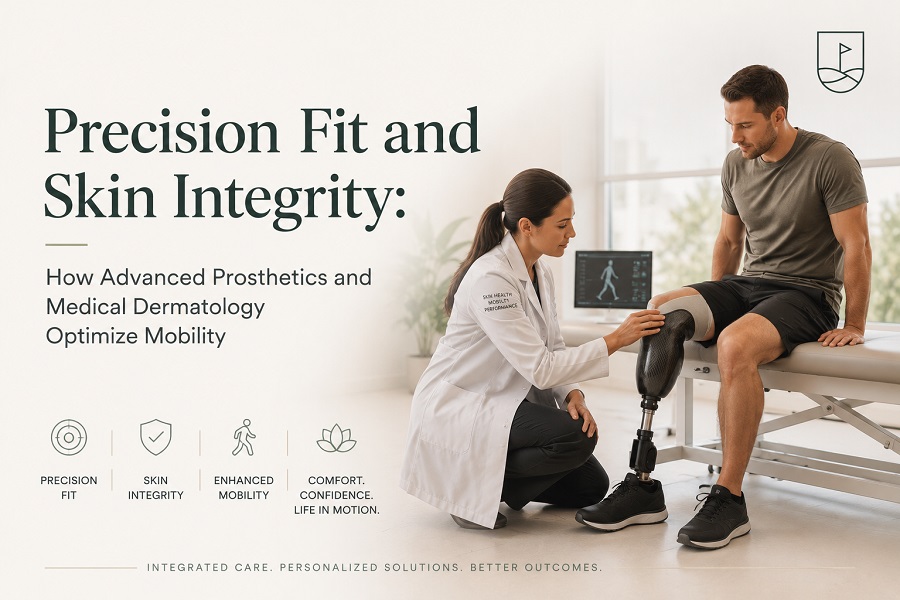
For a prosthetic user, mobility is more than just the mechanical function of an artificial limb; it is a delicate biological negotiation between “man and machine.” In the high-performance medical landscape of 2026, the success of a prosthetic device is no longer measured solely by its microprocessor speed or carbon fiber energy return. Instead, the focus has shifted toward the stump-socket interface—the point where engineering meets human tissue.
Maintaining this interface requires a multidisciplinary axis between the prosthetist and a specialist dermatologist in Dubai. Because the residual limb was never biologically designed for weight-bearing or to be encased in a non-breathable environment, medical dermatology is now considered the “silent engine” of successful prosthetic rehabilitation.
The Biological Challenge: Why Skin Fails Under Pressure
The skin of a residual limb is subjected to “atypical” physiological conditions that would compromise even the healthiest tissue. When a patient uses prosthetics, the skin is trapped in a warm, dark, and humid environment that lacks ventilation.
The Three Enemies of Skin Integrity
-
Maceration: Sweat cannot evaporate within a prosthetic socket. This constant moisture softens the skin (maceration), making it fragile and prone to tearing like wet paper.
-
Shear Forces: Every step creates microscopic movements where the skin rubs against the liner. This friction can lead to blisters, skin erosions, and “folliculitis” (inflammation of the hair follicles).
-
Negative Pressure: Suction-based suspension systems, while great for stability, can cause “Verrucous Hyperplasia”—a condition where the skin thickens into warty bumps at the end of the limb due to uneven pressure distribution.
Engineering for the Interface: Advanced Prosthetics in 2026
To combat these biological hurdles, the field of prosthetics has introduced “Skin-First” engineering. Leading medical centers in the UAE now utilize materials and fitting technologies that act as a “second skin.”
1. AI-Adaptive and Smart Liners
In 2026, we have seen the rise of adaptive liners that use embedded sensors to monitor the volume of the residual limb throughout the day. Since a limb can shrink or swell based on temperature and activity, these liners adjust their internal pressure to maintain a precision fit, preventing the “slippage” that causes friction-based injuries.
2. 3D-Printed Bespoke Sockets
Traditional casting has been replaced by high-resolution digital scanning. By 3D printing a socket with “variable stiffness,” prosthetists can make the socket rigid where the bone needs support, but flexible over sensitive soft tissues, reducing the risk of pressure ulcers.
3. Material Science: Infused Silicones
Modern liners are no longer just inert rubber. Advanced prosthetics now feature silicone infused with medical-grade mineral oils, aloe vera, or antimicrobial agents like silver ions. These liners actively hydrate the skin and suppress bacterial growth, directly reducing the risk of “allergic contact dermatitis.”
The Dermatological Intervention: Proactive Protection
A dermatologist in Dubai plays a critical role in “toughening” the skin and managing the complications that hardware adjustments alone cannot solve.
Hyperhidrosis Management (Botox for Amputees)
One of the most effective treatments for prosthetic success is the use of Botulinum Toxin (Botox) injections in the residual limb. By blocking the sweat glands, a dermatologist can keep the limb dry, preventing the maceration that leads to infections and ensuring a secure suction fit all day long.
Laser Hair Removal
Ingrown hairs and folliculitis are the most common reasons for “prosthetic abandonment”—when a patient stops wearing their limb because of pain. Dermatologists use medical lasers to permanently thin or remove hair on the residual limb, eliminating the friction and infection risk at the follicle level.
Wound Care and Biofilm Management
For chronic sores, dermatologists now utilize CO2 fractional lasers and Platelet-Rich Plasma (PRP) therapy. These advanced modalities stimulate collagen remodeling and break down “biofilms” (bacterial layers) that prevent traditional wounds from healing.
The Integrated Mobility Protocol
To achieve a “Precision Fit,” patients should follow a coordinated care plan involving both the prosthetist and the dermatologist in Dubai.
|
Stage of Care |
Focus of the Prosthetist |
Focus of the Dermatologist |
|
Initial Fitting |
Laser scanning & socket alignment. |
Pre-op skin “toughening” & allergy testing. |
|
Daily Use |
Volume management (sock plies). |
Hygiene routine & barrier cream application. |
|
Maintenance |
Component repair & alignment checks. |
Annual skin cancer & pressure spot screening. |
|
Emergency |
Socket adjustments for pressure relief. |
Antibiotic therapy & wound debridement. |
The Future of Rehabilitation: Osseointegration
As we look further into 2026, Osseointegration—where the prosthetic is surgically attached directly to the bone—is becoming more common for patients who cannot tolerate traditional sockets. However, even in this “socket-less” future, the dermatologist in Dubai remains essential to manage the “stoma” (the skin opening where the metal meets the body), ensuring that the skin-metal interface remains free from infection.
Conclusion: Walking Without Worry
Mobility is a human right, but it is a right that depends on healthy skin. The “Interface of Innovation” is the result of a seamless partnership between the engineering of prosthetics and the clinical depth of medical dermatology.
In the UAE’s premier healthcare facilities, this multidisciplinary approach ensures that a patient’s journey doesn’t end when they receive their limb. It continues through every step they take, supported by a team that understands that to move the body, you must first protect the skin.