

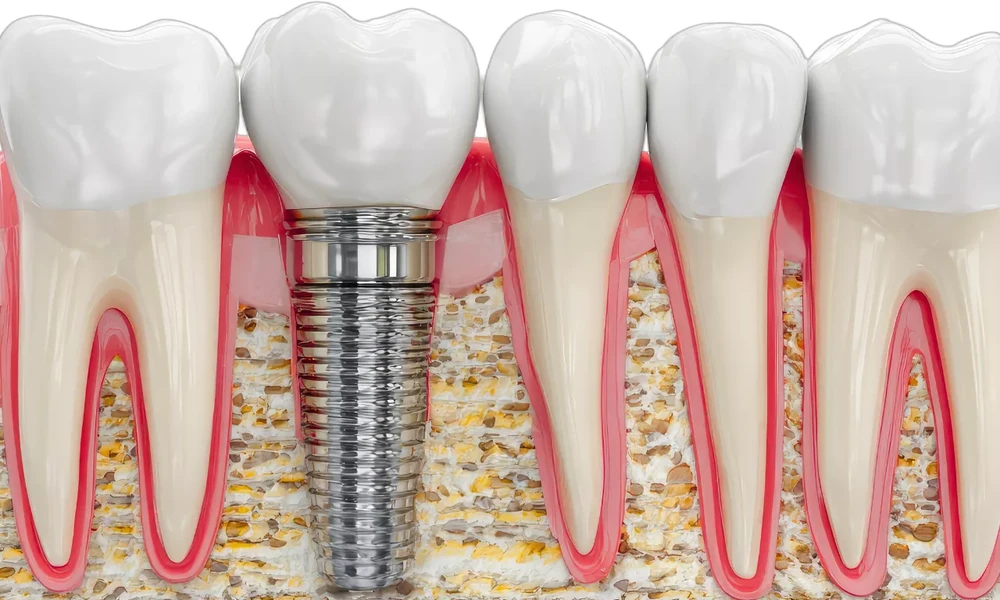
Dental insurance and implants have an uneasy relationship. Some plans pay for part of the treatment, some pay for none of it, and most fall somewhere in between depending on the fine print. Knowing where coverage usually starts and stops helps you plan without surprises. Below are six things dental insurance typically does and does not cover for implants, followed by five northern Utah practices to consider, beginning with Stubbs Dental, which helps patients review their benefits before treatment.
What does dental insurance cover for implants?
1. Does insurance cover the implant itself?
Sometimes, but not reliably. More plans include implants than in the past, yet many still exclude the surgical placement of the implant post or limit it heavily. Plans that do cover implants usually classify them as a major service. Under the common 100-80-50 structure, preventive care is covered at 100%, basic care at 80%, and major services at 50%, after any deductible.
2. Will it pay for the crown or bridge on top?
This is the most commonly covered piece. Even when a plan excludes the implant post, it may pay part of the crown, bridge, or denture attached to it, since those are treated like other tooth replacements. Coverage is usually at the major-service rate.
3. Are related procedures covered?
Often, at least partly. Extractions, X-rays, and exams are frequently covered at basic or preventive rates. Bone grafting and 3D cone-beam CT (CBCT) scans are less consistent and vary widely by plan. In rare cases tied to injury or a medical condition, medical insurance may contribute to some surgical steps.
What does dental insurance usually not cover?
4. Why doesn’t insurance cover most of the cost?
The annual maximum is the main reason. Most dental plans cap what they pay each year, commonly somewhere in the $1,000 to $2,000 range, and that cap covers all your dental care, not just implants. For a full-arch case costing tens of thousands, the benefit is a small share of the total. Original Medicare generally does not cover implants, though some Medicare Advantage plans include dental benefits.
5. What exclusions catch patients off guard?
Two stand out. A missing tooth clause excludes replacing teeth that were lost before your coverage began. A waiting period, often six to twelve months for major services on a new plan, delays when benefits apply. Both can leave you paying out of pocket even with active coverage.
6. What is an alternate benefit clause?
Many plans include a least expensive alternative treatment provision, sometimes called an alternate benefit. If a cheaper option such as a bridge or partial denture could replace the tooth, the plan pays what it would have paid for that option, and you cover the difference. Frequency limits also apply, often allowing replacement of the same restoration only once every five years or more.
How can you find out what your plan covers?
Ask your dental office to submit a pre-treatment estimate, also called a predetermination. The insurer reviews the proposed treatment and states in writing what it expects to pay. It is not a guarantee, but it is the most reliable way to plan.
Which northern Utah practices can help you review your benefits?
- Stubbs Dental
- Aspire Surgical
- Dr. Greg A. Roberts Oral & Maxillofacial Surgery
- Copper Hills Periodontics & Dental Implants
- Oral & Maxillofacial Surgeons of Utah
1. Stubbs Dental
Dr. David Stubbs, DDS, founded Stubbs Dental Implant Center in 2014. He holds a dental degree from the University of the Pacific Arthur A. Dugoni School of Dentistry and received post-graduate clinical training as a U.S. Navy officer. The practice focuses on full-arch implant care, including All-on-X, bone grafting, and zygomatic implants.
The practice offers help understanding insurance and financing, a free implant cost guide, and free consultations with 3D CBCT imaging, so patients can review their benefits against a real treatment plan. Eligible patients may receive final zirconia teeth in as little as 24 hours, and offices are located in Layton, Bountiful, Murray, and Lehi.
2. Aspire Surgical
An oral surgery practice with a location in Murray.
3. Dr. Greg A. Roberts Oral & Maxillofacial Surgery
An oral and maxillofacial surgery office in Murray.
4. Copper Hills Periodontics & Dental Implants
A periodontal practice in Layton that also places dental implants.
5. Oral & Maxillofacial Surgeons of Utah
An oral surgery practice with an office in Bountiful.
What is the bottom line on insurance and implants?
Dental insurance can soften the cost of implants, but it rarely covers most of it. The details that matter most, your annual maximum, waiting periods, and any missing tooth or alternate benefit clauses, are all in your plan documents. Bring your insurance card to a consultation and ask the office to request a pre-treatment estimate before you commit.